| |
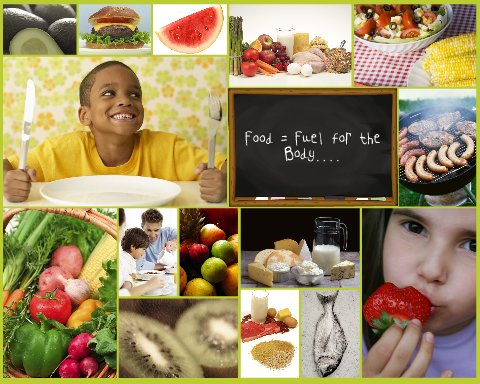
Healthy Food Choices - Lesson Plans
My Appearance - Lesson Plan
|
Staying active - Lesson Plan |
Healthy Food Choices-Lesson Plan 1
( Please see "Students Resources- Learning Journeys" for example of a 'Mouse Mischief' interactive slide show).
|
Learning
Area:
|
Year:
|
Time:
|
Date:
|
|
Science / Health with cross curricula
influence in ICT competence and English/Literacy skills.
|
Year 1 – Year 2
|
10am – 11:10am
|
11th
April 2011
LESSON
1
|
|
Topic/Lesson
Title: Health Food Choices:
Food equals fuel for the body.
|
|
Purpose / Rationale:
|
Educational
Standards Addressed:
|
|
This lesson acts as a prerequisite and introduction to the ‘Staying
Active…,’ and ‘My body….’ lessons. It highlights the importance of making
healthy food choices, and the notion of ‘food as fuel for the body’, an
essential part of the healthy growth and development of our bodies. The main
purpose of this lesson is for students to engage interactively in the lesson,
encouraging them to work collaboratively and independently to gather the
knowledge and skills required to enable them to make the correct decisions
about healthy food choices, and highlight the importance of eating balanced
meals to live healthily.
|
Australian National Curriculum
document details that
“The Science Enquiry Skills and
Science as a Human Endeavour strands described across a two – year band”
(Australian Curriculum and Reporting Agency, 2010).
Year 1 - 2 :
·
“Use matching activities, including
identifying similar things, odd – one - out and opposites” (ACARA, 2010).
·
“Use a range of methods to
sort information including drawings and provided tables” (ACARA, 2010).
·
“Pose questions about their
experiences, record and represent their observations and communicate to
others” (ACARA, 2010).
|
|
Domains
Students
should develop knowledge, skills and abilities in the following areas:
|
|
Cognitive:
·
Organising
information.
·
Problem
solving.
·
Critical
thinking.
·
Evaluation.
·
Comprehension
by correctly identifying and classifying foods according to food groups.
|
Language:
·
Speaking and listening.
·
Literacy
|
Physical:
·
Awareness and knowledge of
healthy eating in relation to growth and development.
·
Refinement and further
development of fine motor skills through the manipulation of the mouse to
answer questions and complete tasks.
|
Creative:
·
Creative thought.
·
Creative expression.
·
Using Integrated Computer Technologies
(ICT) competently and creatively to demonstrate a clear understanding of
topic.
|
Social / Emotional:
·
Participation and co-operation
individually and in group activities.
·
Interacting and communicating
with peers.
·
Developing self -confidence.
|
|
|
Time Allocated
|
|
Objectives:
Comparing
& Contrasting
Making
Choices
Predicting
& Inferring
|
·
Students will identify which
foods belong to which group and why we need to eat more of some food group
and less of others.
·
Students will display that
they are able to make healthy food choices by creating a balanced daily meal
planner.
·
Select and identify healthy
food choices.
·
Work collaboratively to
evaluate and reflect on own groups choice and the choices of other students.
|
|
|
Prior
Knowledge:
|
·
Students are familiar with
different food types and different ingredients that make up the meals they
eat on a daily basis.
·
Basic computer knowledge –
operating a mouse and using clip art, drag and dropping, or cut and pasting.
|
|
|
Preparation/Resources:
|
·
Set up of ‘Mouse Mischief’
program using the designed Power Point presentation and students wireless
mouses.
·
Ensure the ‘My Digital
Classroom’ website is loaded so that students can view the set video as a
starter to the lesson.
·
Briefly explain the operations
of ‘Mouse Mischief’ for those students that are unfamiliar with how it works,
and what you would like them to do as you work through the presentation.
·
Props –yoghurt tub, slice of
cheese, small carton of milk and small carton of chocolate milk.
|
10 Minutes
|
|
Introduction:
|
Students will watch the Disney (1945) animation ‘Planning
for good Eating’ to introduce the idea of the bodies’ need for different
types of foods in order for humans to live and grow properly. Explain to your
students that this animation was created over 66 years ago, and that then it
was believed that there were only 3 major foods groups. Also, explain that it
is, now known that there are more than three essential food groups, and ask
if anyone can guess how many food groups there are?
|
10 Minutes
|
|
Activity:
|
·
Present the ‘Food Pyramid’
slide and explain the five different areas of the Pyramid. Use the pointer in
the Power Point Presentation to physical point out different foods and their
groups. Make sure you clearly describe its similarities and differences from
the idea of the three major food groups in the animation they have just
viewed.
·
Further, reinforce the idea of
the Healthy Food Pyramid and explain the importance of daily servings. Use
the props (yoghurt, cheese, and milk) to provide the students with concrete
examples of the 2-3 servings needed daily. Then replace the milk with the
chocolate milk and ask them “Is this still the same?” Explain that because
the chocolate milk contains lots of sugar, they are actually having a serving
from the top of the Food Pyramid, in the Fats, Oils, and Sweets Group as
well.
·
Using the Mouse Mischief
presentation get the students to identify and match the correct daily serving
recommendations with the correct food groups using the drawing function.
·
On the next slide, have them
identify which food belongs to which group.
·
Move on to the next slide and
have the students ‘dissect’, observe
and identify real life examples of which food group different ingredients of
a meal come from.
·
The next slide is a collage of
foods, have the student observe and identify the healthy food choices by
using the drawing function on the presentation.
·
You have just finished the
second last presentation slide for todays lesson, instruct your students to
work independently on their ‘Learning Journeys’ and explain that once they
have complete this task that they will be required to form small groups of three
students (based on their current seating arrangements) to complete the last
task.
·
These individual tasks will be
guided closely by the teacher, to monitor understanding of the lesson.
·
The last slide in todays
Microsoft ‘Mouse Mischief’ lesson will have students working collaboratively
in small groups of either two or three to create a balanced daily menu. They
will do this by inserting the relevant clip art pictures in the given table.
Groups are asked to identify their completion by selecting the ‘Yes’ option
on the slide.
·
When all groups have finished
each group will be asked to explain and identify two reasons why these foods
are good choices and share these ideas with another group.
|
45 mins
|
|
Formative
Assessment:
|
·
Select the ‘Show results’ tab
on completion of each activity involving the Mouse Mischief slide to monitor
participation and understanding of the task.
·
Questioning during the lesson,
about the tasks.
·
Observations of how well
students participate in group work.
|
|
|
Summative
Assessment:
|
·
Observing the competence
displayed in identifying why and if changes need to be made to their menu
planner, when students are sharing, evaluating, and reflecting on the choices
they make in the group activities.
·
Checking and monitoring
progress and correctness of individual work on ‘Learning Journeys’.
|
|
|
Debrief
and Transition:
|
Finish the lesson by verbally checking for understanding
and enjoyment, ask:
“Did everyone
enjoy what we did today?”
“Were there any problems?” and Explain that tomorrows lesson
will pick up where we finished today. “We will be discussing exactly why we eat…
Think about what you might think the answer is for tomorrow’s lesson”.
|
5 Minutes
|
|
Reflection
& Evaluation:
·
Did the students enjoy the lesson?
·
Did the students work well in groups?
·
Is modification of the structure of the group,
needed to cater for students varying abilities and for better results next
time?
·
Was enough time allocated for the students to
complete tasks and to work through the lesson effectively?
·
Do any areas of the lesson need to be repeated for
better
understanding?
·
Did the students work productively and
effectively with the given resources?
|
|
|
Healthy Food Choices-Lesson Plan 2
|
Learning
Area:
|
Year:
|
Time:
|
Date:
|
|
Science / Health with cross curricula influence
in ICT competence and English/Literacy skills.
|
Year 1 – Year 2
|
10 – 10: 55am
|
12th
April 2011
LESSON 2
|
|
Topic/Lesson Title: Health Food Choices:
Food equals fuel for the body.
|
|
Purpose / Rationale:
|
Educational
Standards Addressed:
|
|
This lesson acts as a prerequisite and introduction to the ‘Staying
Active…,’ and ‘My body….’ lessons. It highlights the importance of making
healthy food choices, and the notion of ‘food as fuel for the body’, an
essential part of the healthy growth and development of our bodies. The main
purpose of this lesson is for students to engage interactively in the lesson,
encouraging them to work collaboratively and independently to gather the
knowledge and skills required to enable them to make the correct decisions
about healthy food choices, and highlight the importance of eating balanced
meals to live healthily.
|
Australian National Curriculum
document details that
“The Science Enquiry Skills and
Science as a Human Endeavour strands described across a two – year band”
(Australian Curriculum and Reporting Agency, 2010).
Year 1 - 2 :
·
“Use matching activities,
including identifying similar things, odd – one - out and opposites” (ACARA,
2010).
·
“Use a range of methods to
sort information including drawings and provided tables” (ACARA, 2010).
·
“Pose questions about their
experiences, record and represent their observations and communicate to
others” (ACARA, 2010).
|
|
Domains
Students
should develop knowledge, skills and abilities in the following areas:
|
|
Cognitive:
·
Organising
information.
·
Problem
solving.
·
Comprehension.
·
Critical
thinking.
|
Language:
·
Speaking and listening.
·
Literacy
|
Physical:
·
Awareness and knowledge of
healthy eating in relation to growth and development.
·
Refinement and further
development of fine motor skills, through the manipulation of the mouse to
answer questions and complete tasks.
|
Creative:
·
Creative thought.
·
Creative expression.
·
Using Integrated Computer
technologies competently and creatively to demonstrate an understanding of
topic.
|
Social / Emotional:
·
Participation and co-operation
individually and in group activities.
·
Interacting and communicating
with peers.
·
Developing self -confidence.
|
|
|
Time Allocated
|
|
Objectives:
Comparing & Contrasting
Making
Choices
Predicting
& Inferring
|
·
Students will identify which
foods belong to which group and why we need to eat more of some food group
and less of others.
·
Students will display that
they are able to make healthy food choices by creating a balanced daily meal
planner.
·
Select and identify healthy
food choices.
·
Work collaboratively to
evaluate and reflect on own groups choice and the choices of other students.
|
|
|
Prior
Knowledge:
|
·
Students are familiar with
different food types and different ingredients that make up the meals we eat
daily on a basis.
·
Basic computer knowledge–
operating a mouse and using clip art, drag and dropping, or cut and pasting.
|
|
|
Preparation/Resources:
|
·
Set up of ‘Mouse Mischief’
program in the designed Power Point presentation and students wireless
mouses.
·
Ensure the slide is in the correct
position to pick up from where you left the lesson yesterday.
·
Briefly explain the operations
of ‘Mouse Mischief’ for students that were not present in class yesterday and
as revision for those students who were. Explain how it works, and what you
would like them to do as you work through the presentation.
|
12 -15 Minutes
|
|
Introduction:
|
Remind students
that you asked them a very important question about food at the end of
yesterday lesson. Ask “Can anyone remember what that question was?” Explain
that there is a very important reason why we eat, furthermore that we get all
our energy from the food we eat, so it is important that we give it the right
type of energy or fuel. Clarify that they will be completing
The questions and activities
just like they did yesterday however, today they will be working in teams or
pairs. This time they will only have one mouse to share to submit the correct
answers. Ask, “has anyone got any questions before we begin?”
|
5 Minutes
|
|
Activity:
|
·
Start the first slide, a
collage of foods, as a revision exercise of the work covered yesterday. Ask
them to identify the unhealthy food options, by utilising the drawing
function.
·
Ask students to identify the
odd-one-out, the food item that does not belong in the same food group, by
responding to the multiple-choice question.
·
Using a multiple-choice question
ask students to identify which group a particular food belongs to.
·
Furthermore, ask students to
examine the real life example of a meal to identify the food groups that
different parts of the meal come from.
·
Give details about the
relationship of food as an energy source and fuel for the body. Also, explain
the consequences of eating the wrong unhealthy food choices and ask them to
think hypothetically about “what would happen if a car was given the wrong
fuel?” Provide example Car + Sand (instead of Petrol) =. “What do you think
would happen to the car….?”
·
Ask them to show their understanding
of what would happen to that car by select the multiple-choice question that
best represents the correct answer. The answer is of course, a very sick,
unhealthy car. Explain that this also applies to our bodies and that we need
a balanced diet for our engines to run correctly.
·
Allow the students to display
their understanding by selecting certain groups to choose a word from the
slide that answers the question “If were give our bodies unhealthy foods all
the time we are more likely to be…?”
Finally, if time permits the
last slide is a fun activity for small groups or pairs to work
collaboratively together. The group who completes the task most effectively
or displays the best behaviour will be rewarded with their choice of either
free time to read either a book or a play the healthy food game from the
website.
|
35 mins
|
|
Formative
Assessment:
|
·
Select the ‘Show results’ tab
on completion of each activity involving the Mouse Mischief slide to monitor
participation and understanding of the task.
·
Questioning during the lesson,
about the tasks.
·
Observations of how well
students participate in group work.
|
|
|
Summative
Assessment:
|
Checking and monitoring
progress and correctness of individual work on ‘Learning Journeys’.
|
|
|
Debrief
and Transition:
|
Congratulate your
students for completing the tasks and express your gratitude, letting them
know how pleased you are with their knowledge about healthy eating habits and
food choices. State “I look forward to seeing all the healthy choices you all
make in your lunch boxes from now on!”
|
|
|
Reflect:
·
Did the students enjoy the lesson?
·
Did the students work well in groups?
·
Is modification of the structure of the group,
needed to cater for students varying abilities and for better results next
time?
·
Was enough time allocated for the students to
complete tasks and to work through the lesson effectively?
·
Do any areas of the lesson need to be repeated
for better understanding?
·
Did the students work productively and
effectively with the given resources?
|
|
|
|